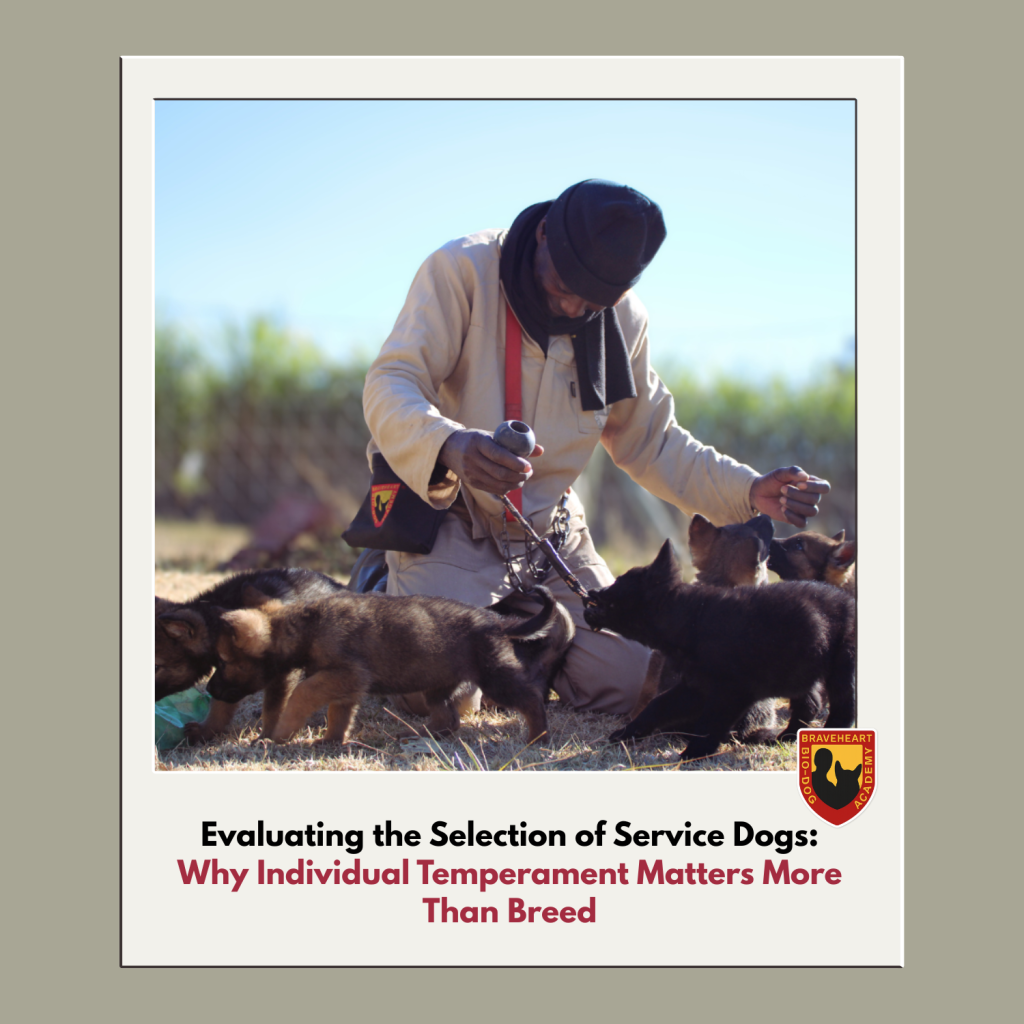
Selecting the right service dog is a critical decision that goes beyond simply choosing a breed. Whether you are considering a companion dog, therapy animal, or service dog, the evaluation process involves careful consideration of behavior, temperament, and suitability for specific tasks.
At Braveheart Bio Dog Academy, we specialize in guiding individuals and organizations in selecting service dogs that excel in their roles. Our evidence-based methods prioritize the unique characteristics of each dog, ensuring optimal performance and long-lasting human-canine bonds.
Why Breed Alone Isn’t Enough
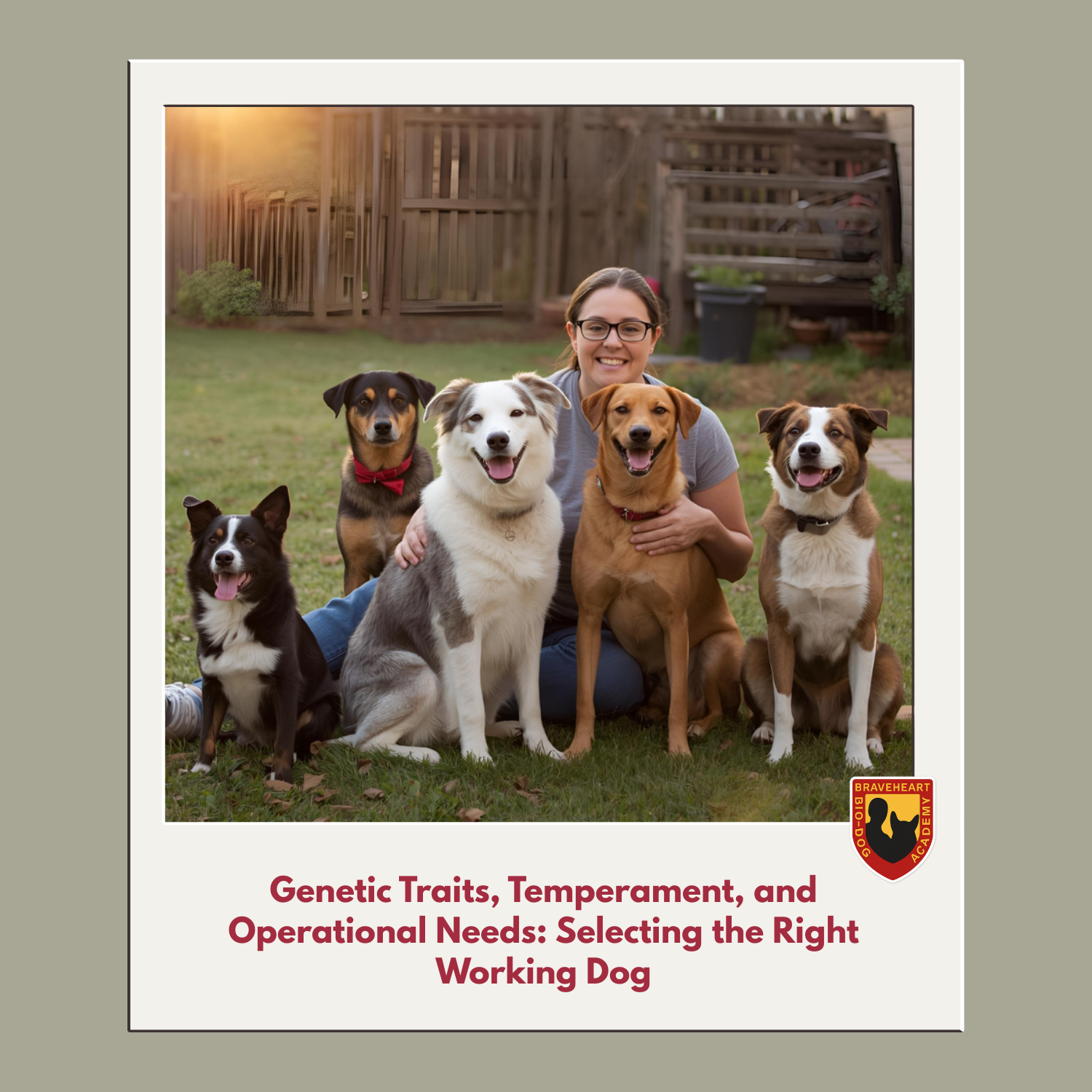
While every dog breed exhibits certain general traits, relying solely on breed stereotypes can lead to disappointing results. For example:
- Labradors are generally friendly and sociable but may vary greatly in focus and endurance.
- Boerboels may display natural guarding instincts that require careful management.
- German Shepherds show wide variations in temperament and work drive among individuals.
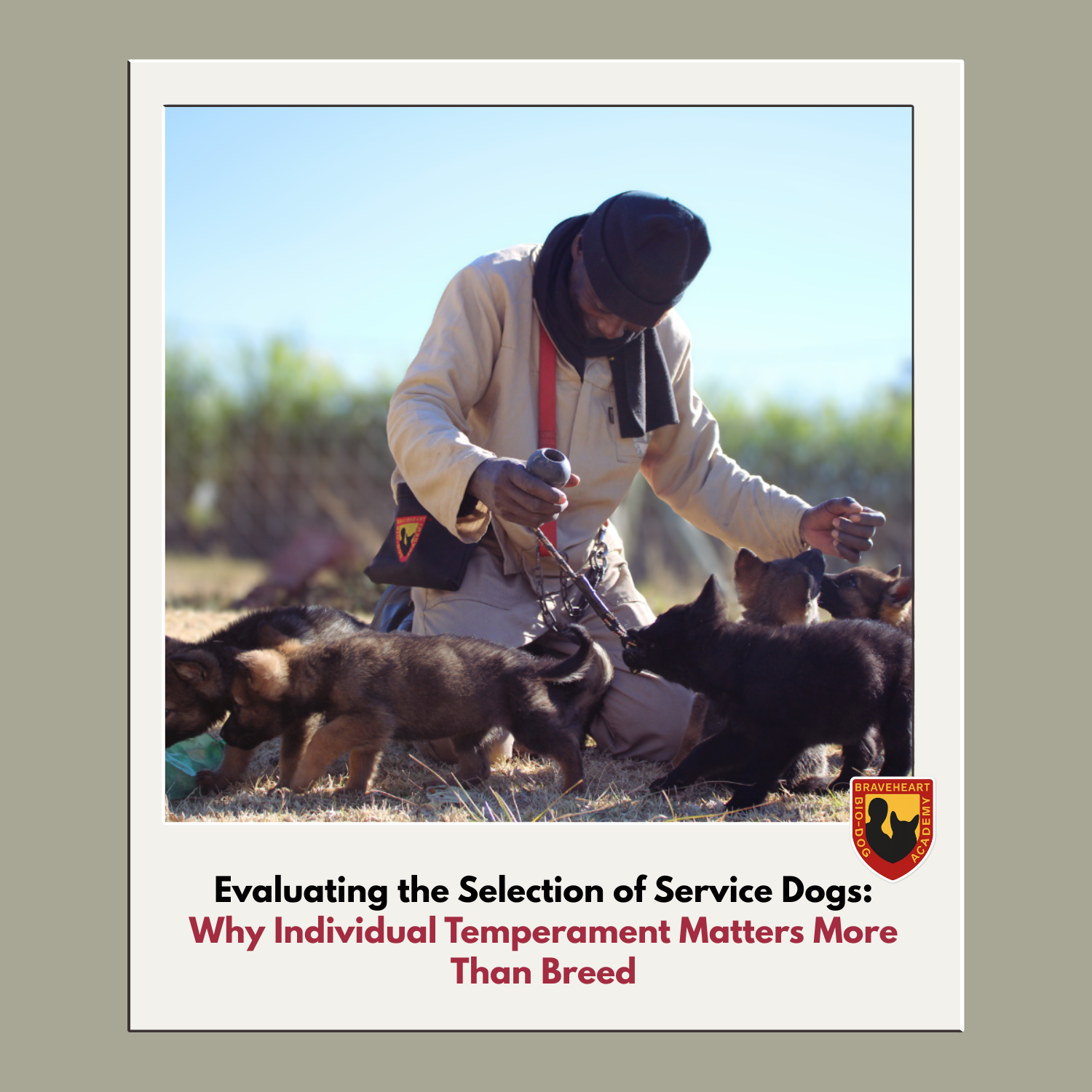
At Braveheart Bio Dog Academy, we focus on individual temperament rather than pedigree. By assessing a dog’s unique behavioral traits, we can determine which dogs are best suited for specific service roles.
Our Selection Process: Science Meets Experience
The selection of a service dog involves thorough evaluation of multiple factors:
- Temperament Testing – Measures a dog’s natural disposition, patience, and adaptability.
- Drive Assessment – Identifies focus, scent drive, and endurance critical for specialized tasks.
- Behavioral Evaluation – Assesses responses to environmental stimuli, humans, and other animals.
This outcome-based approach ensures that each dog is matched to tasks where it can excel. For example, a Rottweiler–Labrador cross at our academy became an international narcotics-detection champion, scanning 20–50 tons of air cargo in just two hours with remarkable precision.
Matching the Dog to the Task
The key to a successful service dog program is aligning the dog’s natural abilities with the specific requirements of its work:
- Detection Work (Drug or Explosive) – Requires high scent drive, focus, and precision.
- Tracking and Anti-Poaching Operations – Demands endurance, composure, and a purposeful mindset.
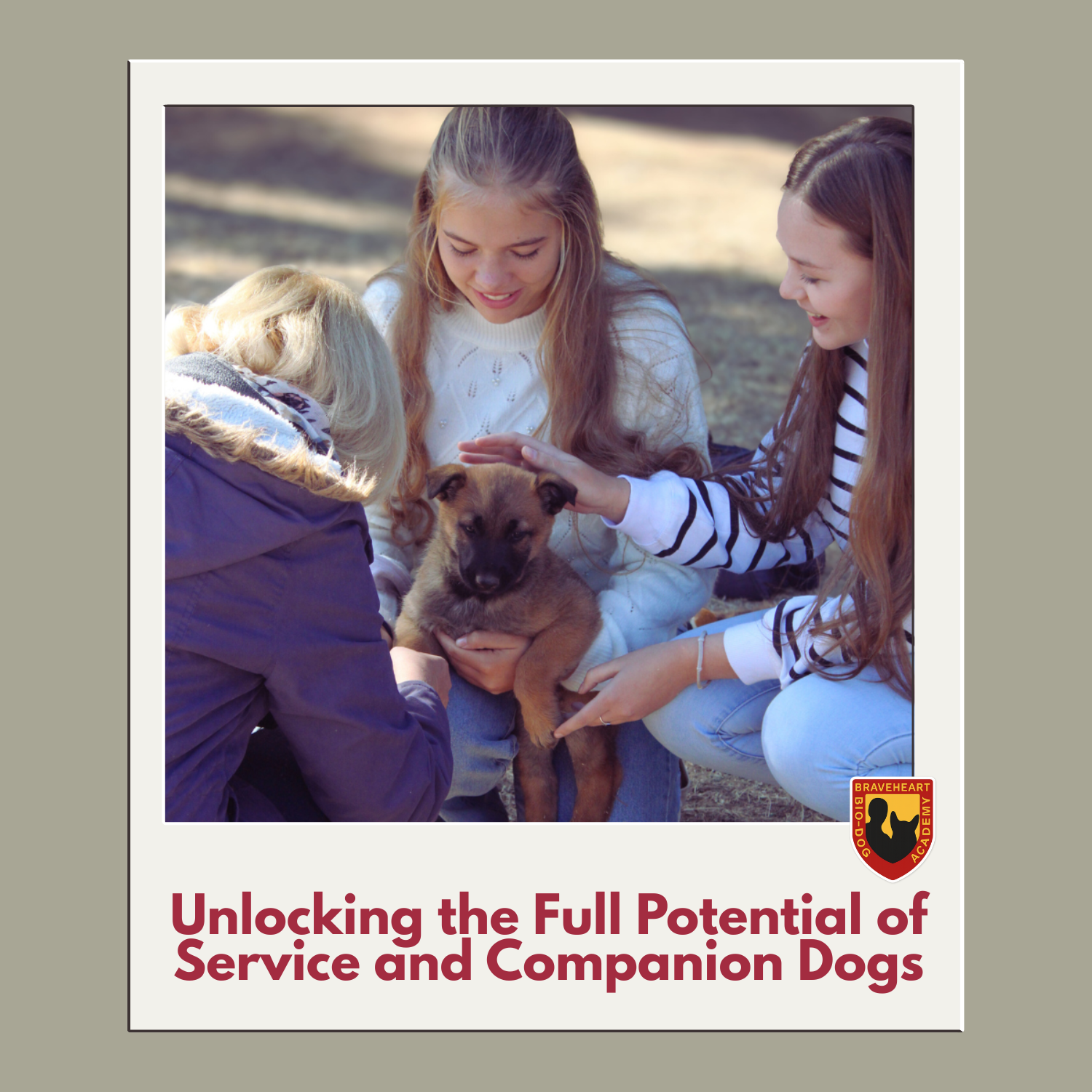
- Assistance for Individuals with Special Needs – Calls for patience, sociability, and adaptability.
Crossbreed dogs often combine the best traits of multiple breeds, making them highly effective in tailored roles. The most crucial factor remains the individual dog’s characteristics, paired with proper training methods.
Why Expert Evaluation Matters
Investing in a service dog is more than a financial decision—it’s a commitment to safety, operational efficiency, and overall well-being. A professionally evaluated dog ensures:
- Suitability of temperament and health
- Alignment with genetic predispositions for specific work
- Optimal performance through scientific training methods
At Braveheart Bio Dog Academy, our approach emphasizes individualized training, allowing dogs to perform at their best while fostering strong, reliable relationships with humans.
Research Insights: Dr. John Greyvenstein on Service Dog Selection
Our practices are informed by extensive research and interviews with experts like Dr. John Greyvenstein, who emphasizes that the selection process is critical for successful service dog deployment. Dogs chosen based on scientific evaluation rather than breed assumptions demonstrate greater reliability, efficiency, and adaptability in real-world scenarios.
Conclusion
Selecting the right service dog is an intricate process that goes beyond breed considerations. By prioritizing individual temperament, drive, and behavioral traits, Braveheart Bio Dog Academy ensures dogs are matched to roles where they can thrive.
Whether for detection work, assistance, or specialized service roles, the right dog transforms lives—both human and canine—through trust, training, and teamwork.