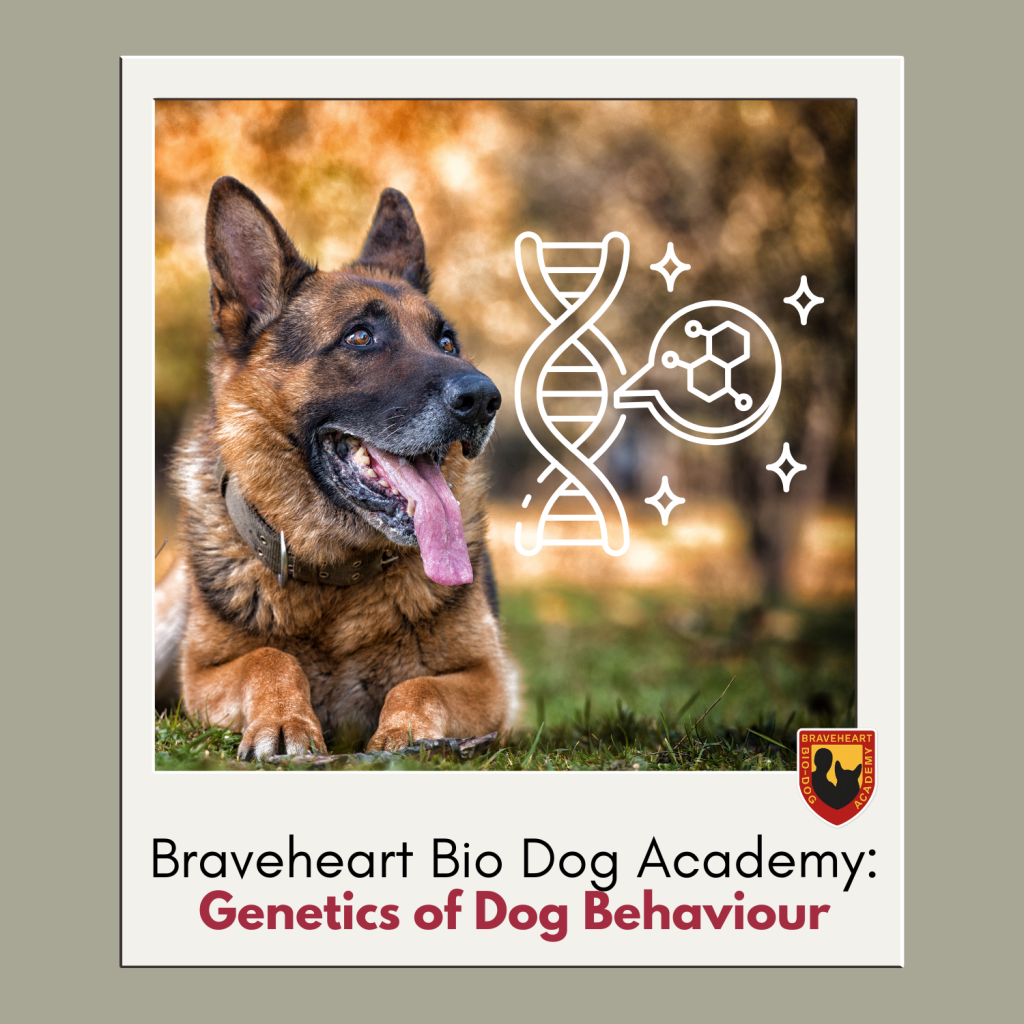
Genetics of Dog Behaviour
The bond between humans and dogs represents one of the most influential relationships in our shared history. This connection shapes how we live, work, and protect our communities. Increasingly, people are drawn to the scientific explanations behind dog behaviour, particularly how genetics influence temperament, intelligence, and working ability.
Understanding canine behaviour through genetics not only deepens our appreciation for dogs but also provides critical insights into why dogs behave the way they do. Behaviour is not random — it is the result of a complex interaction between genetic inheritance and environmental influence, working together to shape each dog’s personality and abilities.
The Genetic Foundation of Canine Behaviour
Scientific research confirms what many experienced dog owners and trainers have long observed: a dog’s temperament has a strong genetic basis. Unlike simple physical traits such as coat colour, behaviour is a polygenic trait, meaning it is influenced by multiple genes acting together. This complexity makes it difficult to isolate a single “behaviour gene.”
To study these traits, scientists use advanced statistical and genetic analysis to examine behavioural patterns alongside inheritance systems. One of the most important concepts in this research is the heritability value (H²).
What Is Heritability (H²)?
Heritability (H²) measures how much of the variation in a trait within a population is due to genetics, expressed on a scale from 0 to 1.
A higher H² value indicates that a behaviour has a stronger genetic component and can be more reliably influenced through responsible selection and breeding programs.
The high heritability of many canine behavioural traits allows breeders and trainers to develop specific working abilities and stable temperaments that can be passed down to future generations — provided this process is guided by knowledge and ethics.
Selecting the Right Temperament
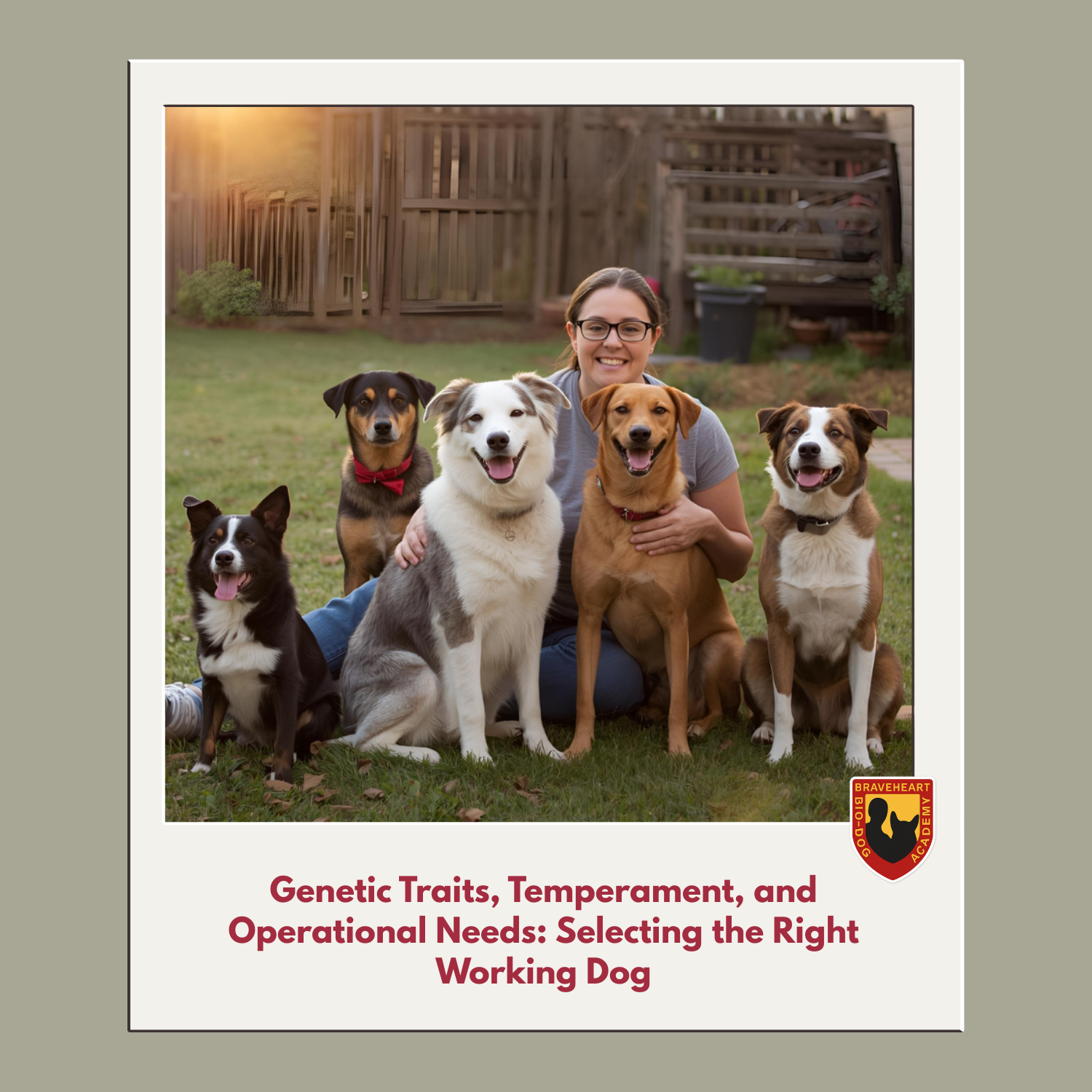
Choosing the appropriate temperament is essential for a dog’s success, well-being, and relationship with humans. This knowledge is especially important when breeding or training dogs for specialised roles such as detection, tracking, protection, or family integration.
For example, a dog with an exceptional sense of smell may be well-suited for detection work. However, if the operational environment also requires a calm, social, and stable demeanour — as seen in breeds like the Labrador — both working ability and temperament must be considered together.
Because these traits are heritable, it is possible to develop bloodlines that combine high-performance capabilities with balanced, reliable behaviour.
Responsible selection is not about producing aggression or intensity — it is about producing control, predictability, and suitability for purpose.
Breeding without proper knowledge or pairing dogs with inappropriate handlers can result in dangerous situations. Dogs with strong drives and abilities must be guided by trained professionals who understand how to channel these traits constructively and ethically.
Environment and Development
While genetics provide the blueprint, environment determines expression.
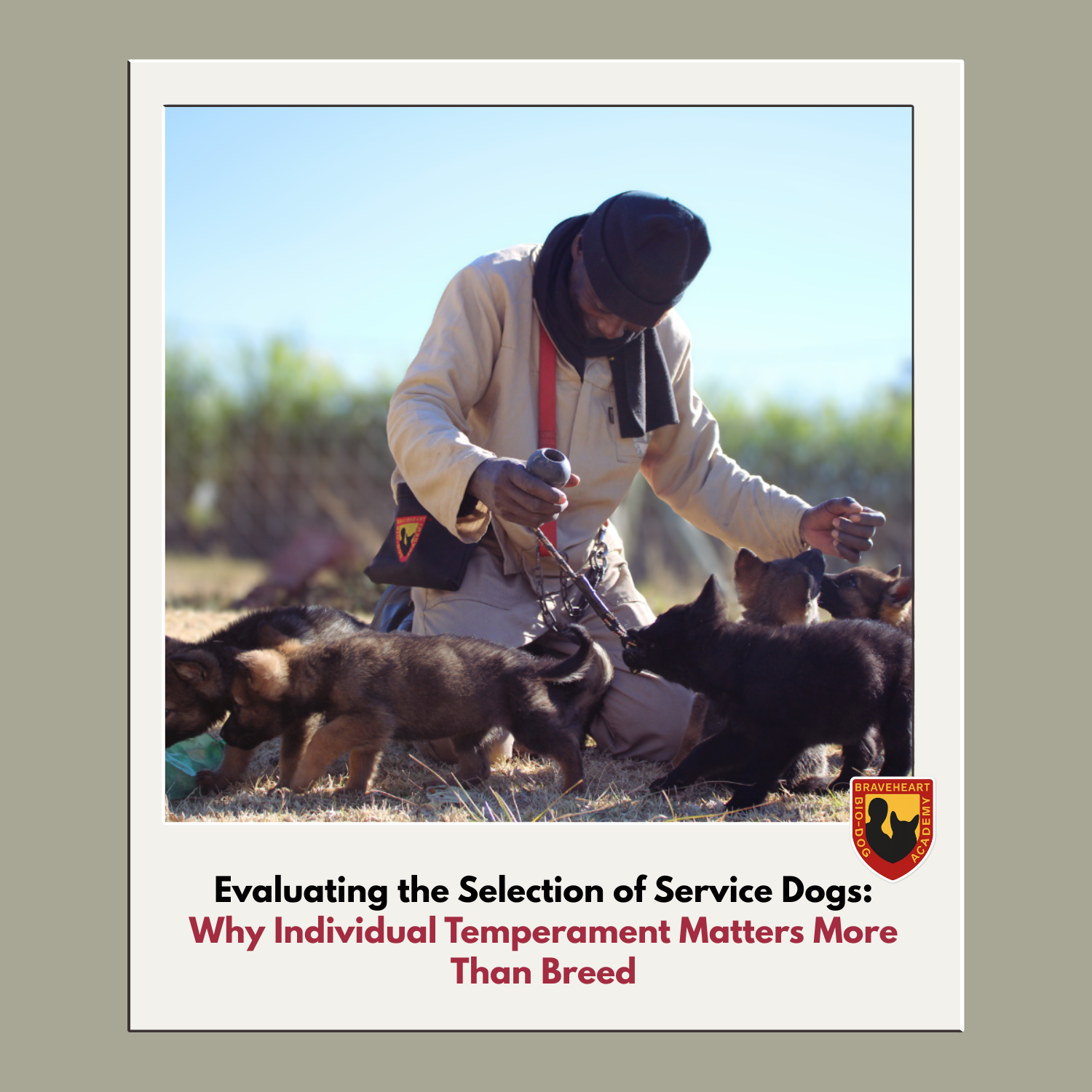
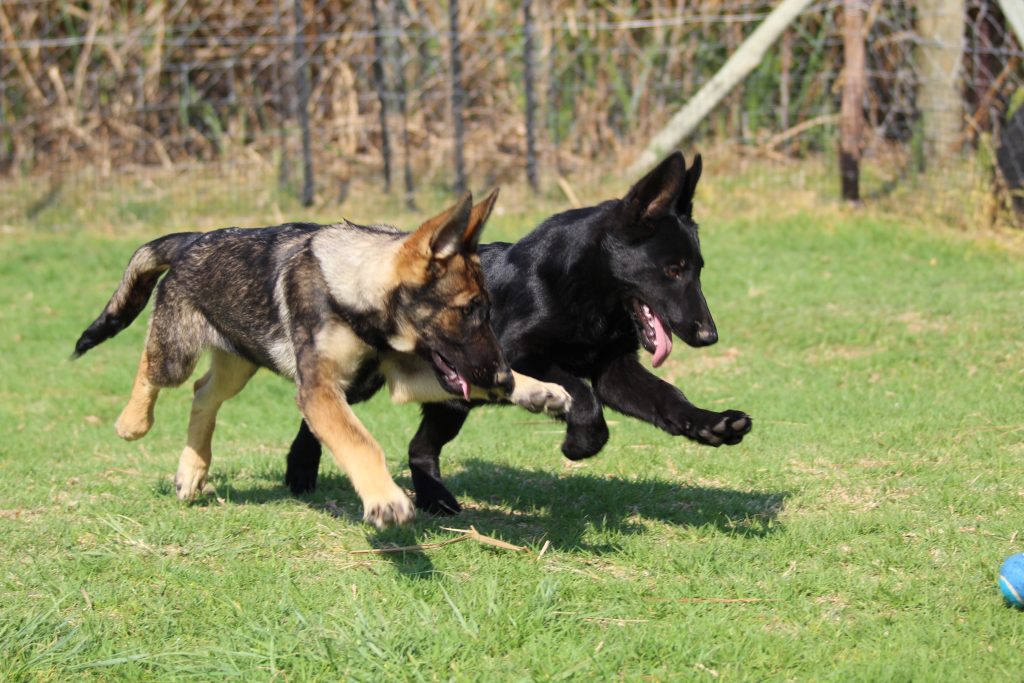
A puppy’s behaviour is highly influenced during a sensitive developmental phase, typically between 8 and 16 weeks of age. During this period, puppies are particularly receptive to:
- Socialisation
- Desensitisation
- Learning and environmental exposure
How a puppy is handled during this phase has a lasting impact on its adaptability, confidence, and emotional stability as an adult dog. If this critical period is neglected, undesirable behavioural patterns may develop that are difficult to correct later.
In other words:
- Genetics define potential
- Training and environment define outcomes
Training, Science, and Practical Application
A dog’s genetic profile determines its natural abilities, but expert training and environmental management determine how those abilities are realised in real-world conditions.
At Braveheart Bio-Dog Academy, dogs are trained using a science-based understanding of behaviour combined with practical, hands-on experience. This approach develops not only technical skills but also emotional control, reliability, and strong human–dog communication.
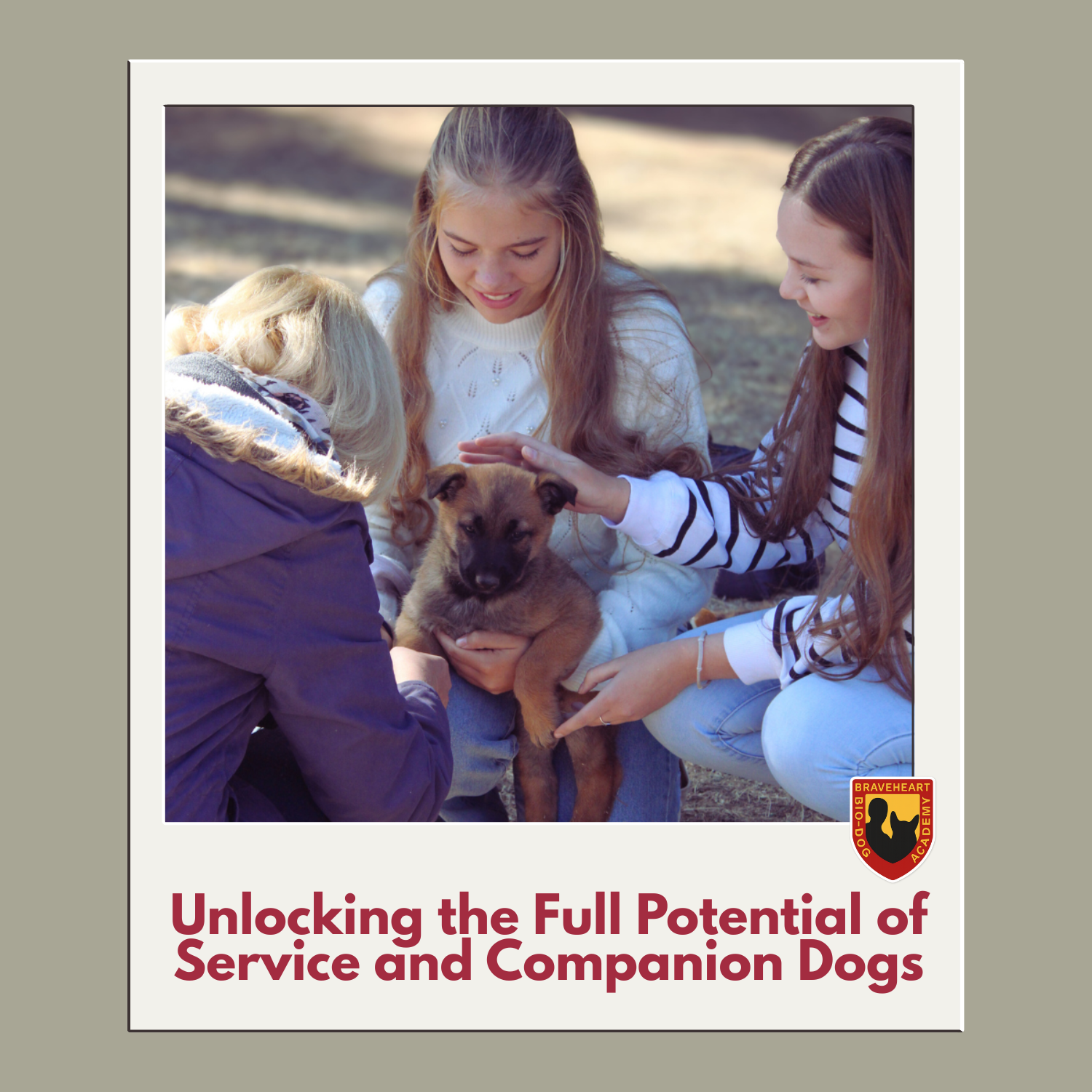
By carefully selecting dogs for specific roles and pairing them with skilled handlers, dogs become valuable assets — whether serving families, communities, conservation efforts, or professional security environments.
The Importance of Understanding Canine Genetics
A solid understanding of the genetic foundations of behaviour enables:
- Better selection of dogs for specific tasks
- Safer and more ethical working practices
- Stronger, more reliable human–canine partnerships
When dogs are matched correctly to their roles and trained with insight and respect, the result is improved performance in the field and healthier, more balanced relationships overall.
At Braveheart Bio-Dog Academy, this science-driven philosophy guides every aspect of our selection, breeding, and training programs. By integrating genetic predisposition with structured environmental development, we help dogs reach their full potential — not only as working partners, but as dependable, well-adjusted companions.