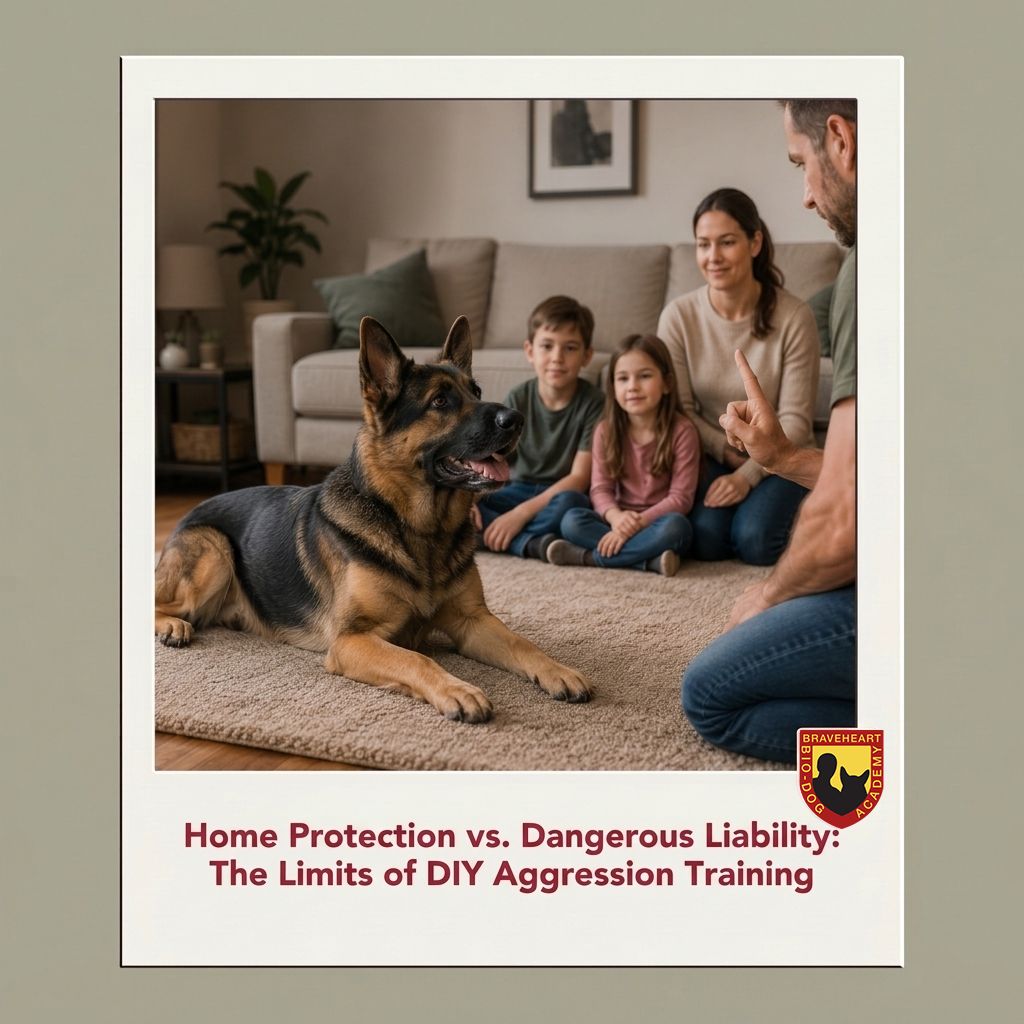
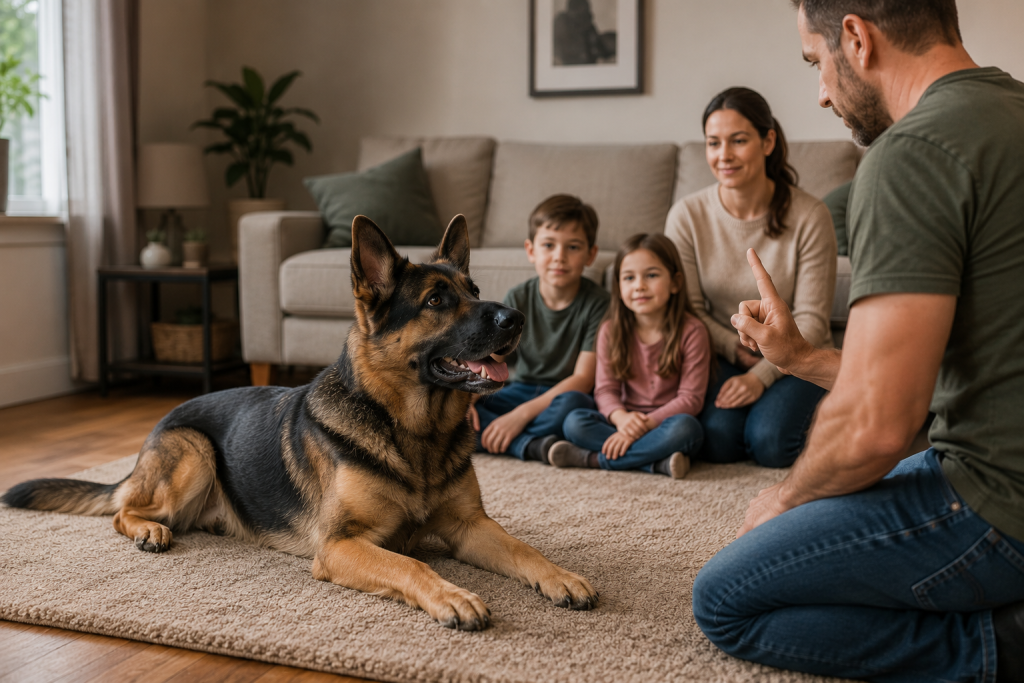
Thinking about training your dog for personal protection at home? Discover why DIY aggression training creates dangerous liabilities—and how to safely guide your dog’s natural protective instincts instead.
Given the current security environment across South Africa, it’s completely understandable why so many families want a dog that can actively protect their home. The desire for safety and peace of mind is entirely valid.
However, a growing trend among dog owners is causing serious alarm: attempting home-based aggression training.
At Braveheart Bio Dog Academy, we frequently meet families who tried to train their dogs to display protective aggression at home, only to end up with an anxious, unstable, or genuinely dangerous dog that threatens the very people it was supposed to protect.
The intention behind home training is usually good, but the methods are risky—and the psychological damage to the dog can be difficult and expensive to undo.
1. Why Professional Security Training Fails in a Family Home
The techniques used to train working dogs for the military, police, and formal security services have been refined over decades. These dogs are carefully selected for specific psychological profiles and trained by high-level professionals under strictly controlled conditions.
Key Difference: What creates a reliable protector in an operational security environment can produce a total crisis in a family living room.
Formal security training primes dogs to react aggressively to specific cues. When applied in a family setting, these methods create massive liabilities where:
- Children move quickly and unpredictably.
- Guests and visitors arrive without warning.
- The dog must safely navigate dozens of different social interactions and stimuli daily.
An artificially pressured dog isn’t a safe guard dog—it’s a walking hazard.
2. Your Dog Already Has Protective Instincts
The encouraging news for home owners is that you don’t need to manufacture aggression. Most family and working breeds naturally carry strong protective instincts developed over generations of selective breeding.
These instincts do not need to be forced through pain, fear, or frustration. They simply need to be recognized, understood, and guided.
| Natural Protective Instincts DOCX | Induced Home Aggression DOCX |
| Stable & Proportionate: Assesses threats calmly before acting. | Unstable & Reactive: Responds out of fear, stress, or confusion. |
| Family Safe: Discerning with guests, children, and friendly visitors. | Unpredictable: Puts family members and guests at risk. |
| Trust-Based: Relies on clear guidance and leadership from the owner. | Fear-Based: Driven by pressure, anxiety, or high arousal. |
A naturally secure dog continuously monitors its environment, notices changes, and reacts appropriately when something genuinely warrants action. It provides real protection without becoming a liability every time someone greets your family at the gate.
3. What You Can Safely Achieve with Home Training
While home-based aggression training is unsafe, there is plenty you can build with your dog at home to enhance household safety:
- Rock-Solid Obedience: A reliable recall and rapid response under distraction keep both your dog and your family out of danger.
- Controlled Alert Behaviors: Teaching your dog to bark on cue when someone approaches the property gives you an early warning system without encouraging biting.
- Clear Communication & Structure: Consistent routines build a confident, emotionally secure dog that trusts its handlers implicitly.
A calm, stable dog that trusts its owner is a far more reliable line of defense than a panicked dog pushed into reactive biting.
4. When to Seek Professional Protection Training
When your household’s safety needs go beyond standard obedience and natural instincts, professional guidance is non-negotiable. Improvised home drills or casual, once-a-week inputs often create risks that families simply aren’t equipped to manage safely.
Proper personal protection training focuses on developing a dog that:
- Remains entirely trustworthy around all types of people, children, and social situations.
- Feels completely secure in its home environment.
- Responds reliably to its owner’s commands in any high-stress scenario.
Build Real Security for Your Home and Family
Distinguishing between natural protective instincts and induced artificial aggression is the most important decision you can make for your home’s safety. Developing natural capability builds true peace of mind; forcing aggression creates dangerous liabilities.
At Braveheart Bio Dog Academy, we help families build genuine security through professional evaluation, expert handling, and structured training designed for real-world living.
👉 Looking to assess your dog’s natural protective instincts or start professional training?
Visit the Braveheart Bio Dog Academy Website today to speak with our certified training specialists!