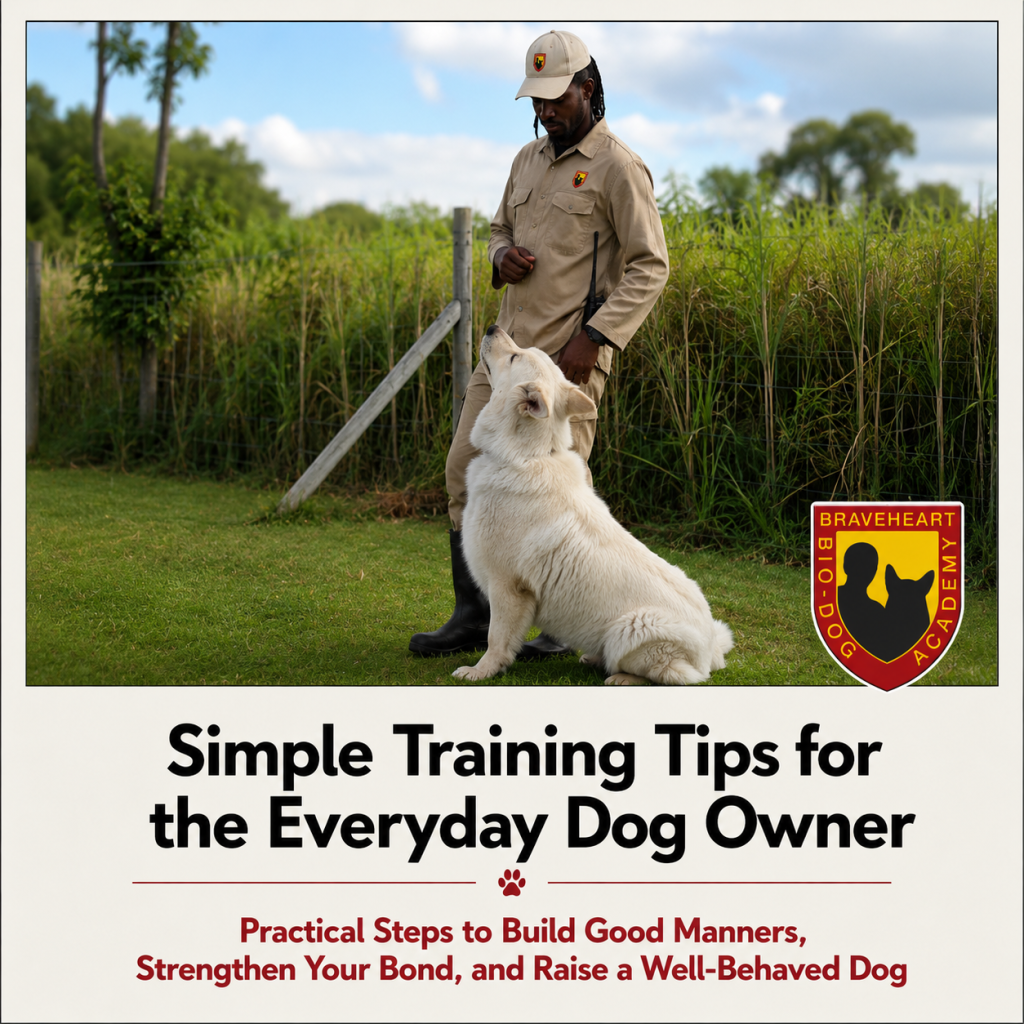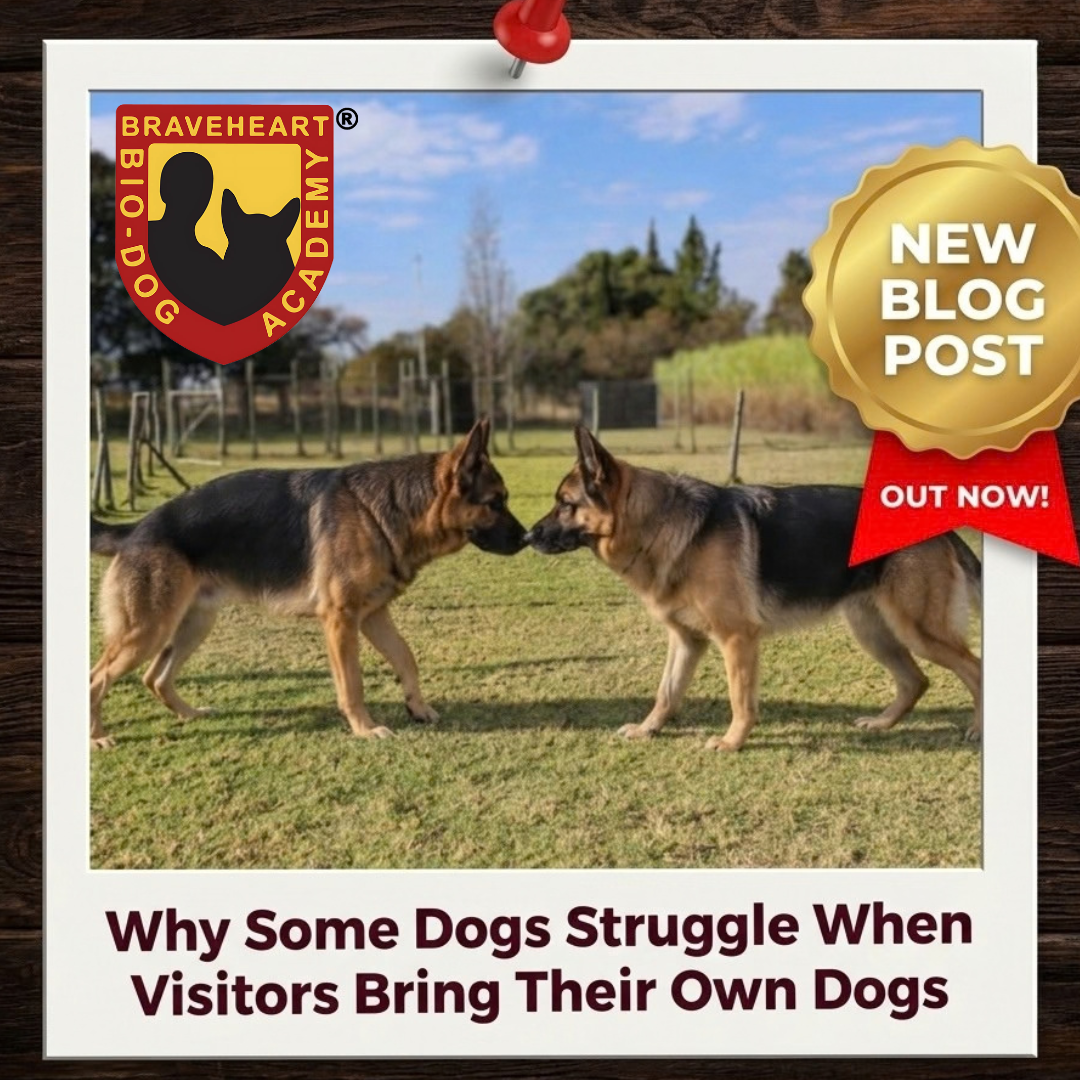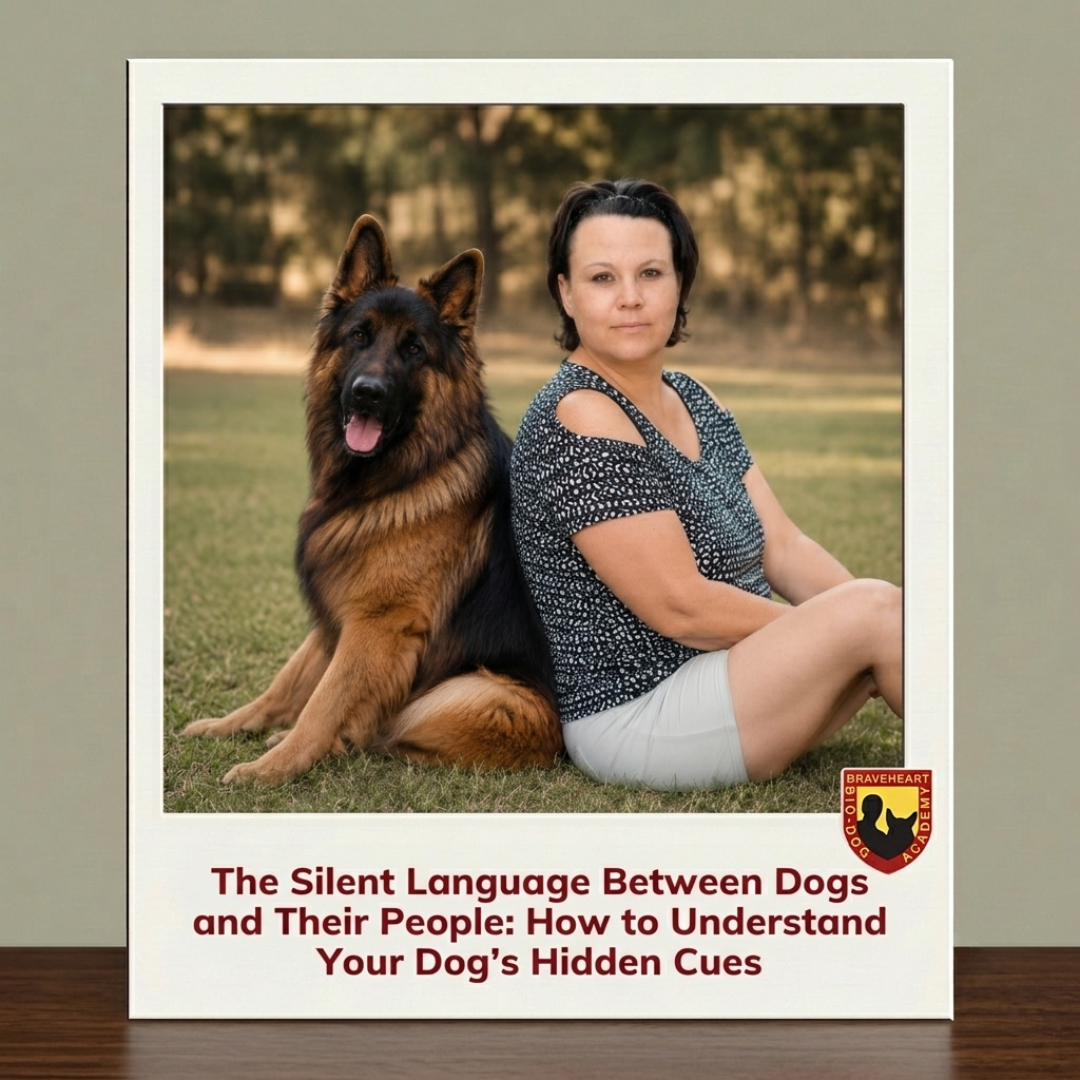
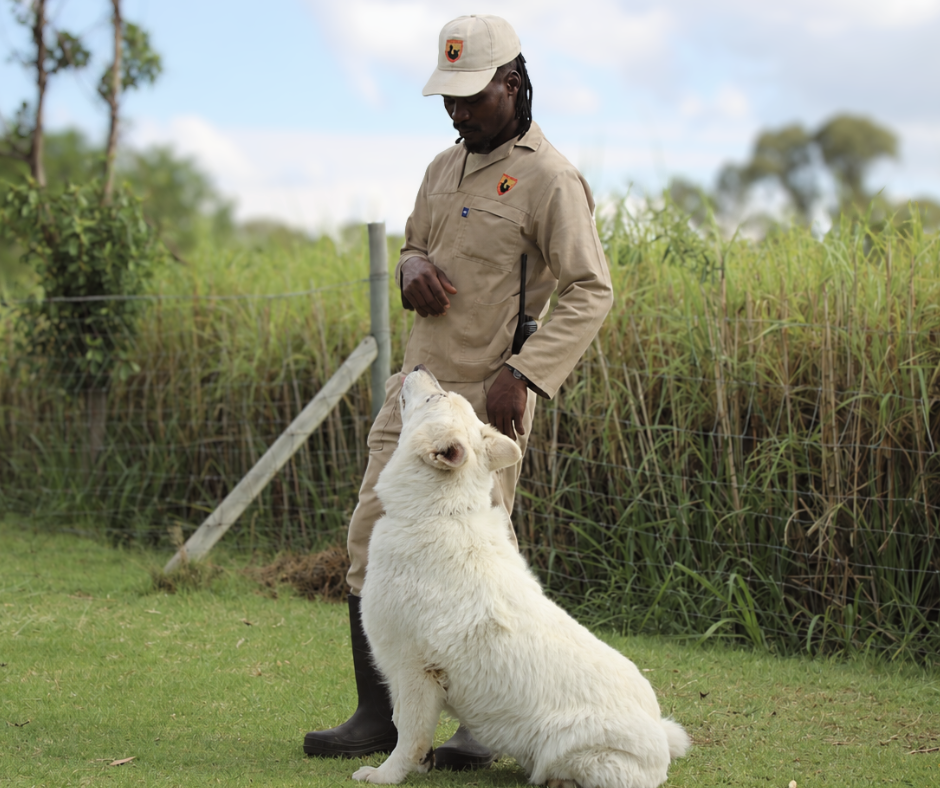
Practical Dog Training Advice for Building a Calm, Well-Behaved Family Dog
Training your dog doesn’t have to be complicated. Most dog owners want the same outcome: a calm, well-mannered dog that listens, behaves appropriately, and fits comfortably into family life.
The truth is that successful dog training is not built on long, intensive training sessions. Instead, it develops through small, consistent habits that become part of your daily routine.
At Braveheart Bio-Dog Academy, we believe that the most effective dog training happens in everyday moments. When training becomes part of how you live and interact with your dog, trust grows, communication improves, and behavioural problems become easier to manage.
Start with Calmness Before Training
Many dog owners believe training starts with teaching commands such as “sit” or “stay.” In reality, effective training begins with creating a calm state of mind.
An overexcited, anxious, or overstimulated dog struggles to focus and learn. Calmness allows dogs to process information and respond more effectively.
Before training your dog:
- Speak in a calm tone
- Move slowly and deliberately
- Avoid creating unnecessary excitement
- Give your dog time to settle
Dogs naturally mirror the emotional state of their owners. When you remain calm and confident, your dog is more likely to do the same.
Short Training Sessions Produce Better Results
One of the most common dog training mistakes is trying to train for too long.
Dogs learn best through short, focused training sessions that keep them engaged and motivated. Five minutes of training several times throughout the day is often more effective than a single hour-long session.
Benefits of short training sessions include:
- Better focus
- Improved retention
- Reduced frustration
- Increased consistency
- Easier integration into daily life
Professional dog training is not about how long you train. It’s about how consistently you reinforce good behaviour.
Turn Everyday Activities into Training Opportunities
Everyday routines provide excellent opportunities to reinforce good behaviour.
Simple activities can teach valuable life skills:
- Waiting calmly before meals
- Sitting before going through doors
- Walking politely on a lead
- Remaining calm while visitors arrive
- Waiting patiently while you prepare food
These small moments teach patience, self-control, and respect for boundaries.
When dog owners begin viewing daily interactions as training opportunities, behavioural improvements often happen naturally.
Reward Good Behaviour Immediately
Timing plays a crucial role in dog behaviour training.
When your dog offers a behaviour you want to encourage, reward it immediately. This helps your dog clearly associate the behaviour with a positive outcome.
Rewards can include:
- Verbal praise
- Affection
- Play
- Food rewards
- Attention
One of the biggest mistakes dog owners make is only reacting when something goes wrong.
Dogs thrive when good choices are noticed and rewarded consistently.
Use Clear and Consistent Communication
Dogs do not understand language the way humans do. Instead, they learn through repetition, tone, body language, and patterns.
To avoid confusion:
- Use the same command consistently
- Keep expectations clear
- Avoid changing cues frequently
- Maintain consistent body language
For example, if you use the command “sit,” avoid replacing it with different words such as “down,” “wait,” or “settle.”
Consistency helps dogs learn faster and strengthens trust between owner and dog.
Avoid Harsh Punishment and Corrections
Effective dog training focuses on teaching, not intimidating.
Harsh corrections, yelling, or physical punishment may stop behaviour temporarily, but they often create fear, confusion, and anxiety.
Dogs learn best when they feel safe and confident.
At Braveheart Bio-Dog Academy, we focus on reward-based dog training methods that encourage emotional stability, confidence, and long-term behavioural success.
The goal is not simply to stop unwanted behaviour. The goal is to teach your dog what to do instead.
Redirect Unwanted Behaviour
Unwanted behaviour often indicates that a dog is confused, bored, overstimulated, or lacking direction.
Instead of punishment, redirect the dog toward a more appropriate behaviour.
Examples include:
- Redirecting jumping into a calm sit
- Offering a toy instead of chewing furniture
- Encouraging a down-stay instead of pacing
- Providing structured exercise for excess energy
Redirection helps dogs learn appropriate choices while maintaining trust and confidence.
Patience Is One of the Most Important Training Tools
Dog training is rarely a straight path.
Some days your dog will perform exceptionally well. Other days progress may seem slow.
What matters most is consistency and emotional control.
Dogs are highly sensitive to human emotions. When owners become frustrated, impatient, or tense, dogs often become unsettled and less responsive.
Patience helps build:
- Trust
- Confidence
- Emotional stability
- Long-term behavioural success
The strongest relationships are built through calm guidance and consistency.
Know When to Seek Professional Dog Training Help
Some behavioural challenges require professional guidance.
Signs your dog may benefit from professional training include:
- Reactivity toward people or dogs
- Excessive barking
- Fear-based behaviour
- Anxiety
- Aggression
- Difficulty settling
- Poor obedience
Seeking help early often prevents small issues from becoming larger behavioural problems.
At Braveheart Bio-Dog Academy, we provide personalised dog training programmes designed to address the root cause of behavioural challenges while building confidence and balance.
Final Thoughts
Successful dog training does not require complicated techniques or endless hours of practice.
The most effective training comes from:
- Consistency
- Calm leadership
- Clear communication
- Positive reinforcement
- Daily habits
By incorporating simple training principles into everyday life, dog owners can create a stronger bond with their dogs while building trust, confidence, and good behaviour.
Over time, these small daily actions create a calmer, happier, and more balanced family dog.
Professional Dog Training in South Africa
At Braveheart Bio-Dog Academy, we specialise in helping dogs and owners build strong, healthy relationships through science-based training and behavioural development.
Our Services Include:
✔ Puppy Training
✔ Obedience Training
✔ Dog Behaviour Training
✔ Personal Protection Training
✔ Detection & Tracker Dog Training
✔ Working Dog Development
✔ Family Dog Training
Whether you’re struggling with behavioural issues or simply want to build a stronger connection with your dog, our experienced team is here to help.
📍 Plot 82, Elandshoek, Rayton, Gauteng, South Africa
📞 082 780 1420
📧 info@braveheart.co.za
🌐 www.braveheart.co.za
Book Your Training Consultation Today
Give your dog the guidance, structure, and training they need to become a calm, confident, and reliable companion.
Contact Braveheart Bio-Dog Academy today and take the first step toward a stronger relationship with your dog.